
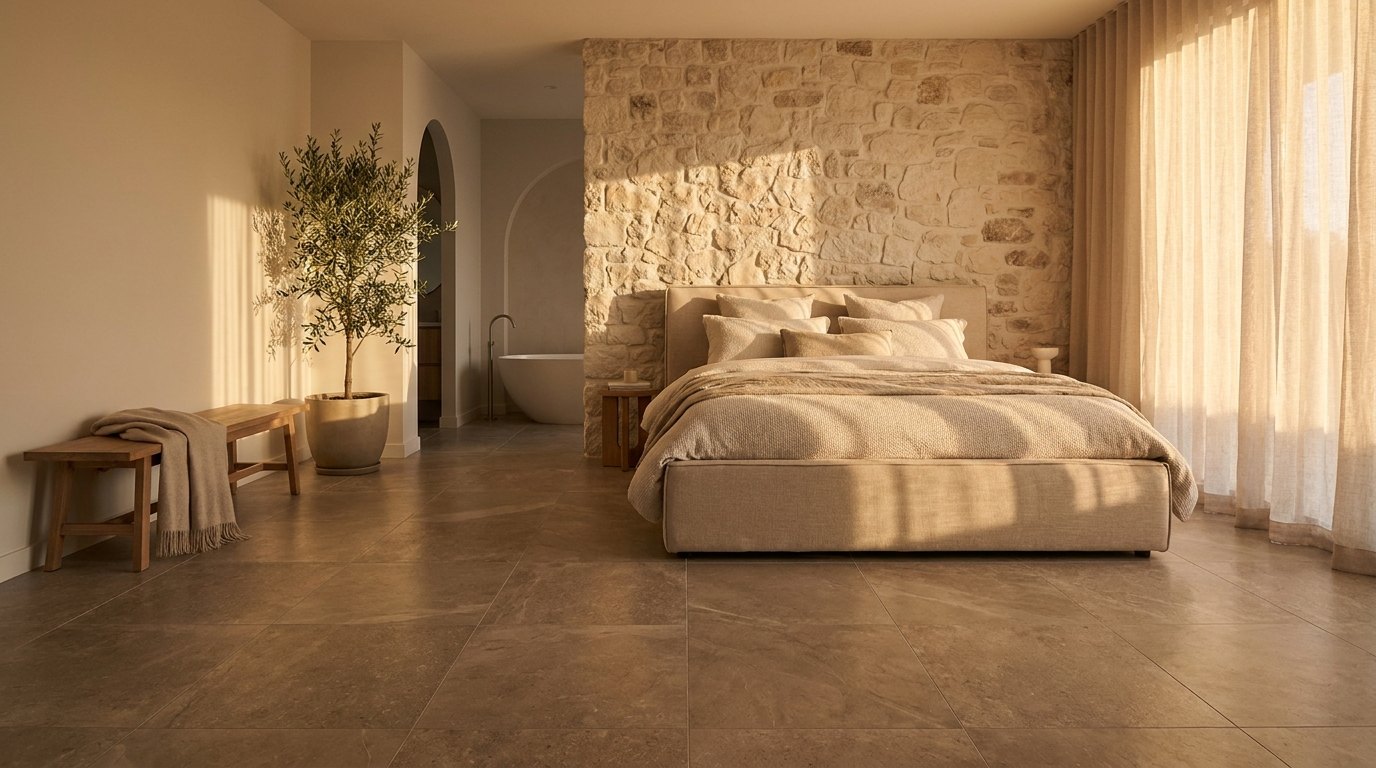
Plank · Chevron · Herringbone
Timber look tiles.
The warmth of timber, the resilience of porcelain. Oak, walnut, ash — in plank, chevron and herringbone formats. No sealing, no scratching, and the same surface from kitchen to alfresco.
Browse & filter
Filter all 80 timber-look tiles
Showing 24 of 80

Latte Cortina
540 × 110mm · matte

Latte Positano
540 × 110mm · matte

Latte Marfil
540 × 110mm · matte

Latte Garda
540 × 110mm · matte

Calacatta Sereno
1500 × 240mm · textured
Rovere Siena
1500 × 240mm · textured

Calacatta Australe
1500 × 240mm · textured

Legno Diamante
1500 × 240mm · textured

Frassino Atelier
1500 × 240mm · matte

Larice Levante
1500 × 240mm · matte

Calacatta Levante
1500 × 240mm · matte

Calacatta Brezza
1500 × 240mm · matte
Castagno Parma
1200 × 200mm · textured
Legno Raffinato
1200 × 200mm · matte
Olmo Como
1200 × 200mm · matte

Legno Lumière
1200 × 200 · polished

Portoro Taffeta
1200 × 200 · polished

Cemento Sole
1200 × 200 · matte

Faggio Provence
1200 × 200 · matte
Made to order
Noce Toscano
1200 × 200mm · matte
Olmo Firenze
1200 × 200mm · matte
Veneto Aurora
1500 × 250 · matte
Castagno Pisa
1500 × 250 · matte
Latte Corte
1200 × 600 · matte
About timber look
Why porcelain over real timber. Timber tiles get the look without the downsides — no swelling near showers, no scratching from pets or chair legs, no sun fade on north-facing rooms, no sealing every two years. The visual gap between the best inkjet porcelain and real engineered oak is now measured in seconds of inspection rather than rooms across.
Plank vs herringbone vs chevron. Plank format (200×1200 or 200×1500) reads contemporary and stretches the room. Herringbone (75×300 or 90×450) brings classic warmth. Chevron (long-cut at 45°) is the more dramatic of the two, often used in feature halls and bathrooms.
Indoor / outdoor continuity. Several ranges supply a 20mm structured outdoor paver in the same finish as the indoor 10mm tile — letting you run the timber visual from kitchen straight out to the alfresco without a transition.
Specifying & install
Pattern repeat. Premium ranges have 12+ unique tile faces; budget ranges 4–6. The repeat is the giveaway. Lay 12 tiles dry before mortar to check the spread.
Lay in the right direction. Plank format reads best laid along the longer axis of the room. Herringbone reads best at 45° to the main wall.
Order 15–20% extra. Plank lays have inevitable cuts at perimeter walls. Herringbone and chevron need 20% — every wall edge is a 45° cut.
Need a recommendation? Talk to a tile expert →
Timber-look questions
Do timber-look tiles look like real wood?
Premium ranges with 12+ unique tile faces, deep micro-relief and matched vein orientations look convincingly like timber even at close range. Budget ranges with 4–6 faces have visible repeat. Always check the number of faces before buying.
Where does timber-look tile work best?
Anywhere you want timber's warmth without the maintenance — kitchens, bathrooms, open-plan living, hallways, alfresco. The major win is being able to run the same visual from kitchen out to a covered deck without a transition.
Can I use timber-look tiles in a bathroom?
Yes — and it's one of the strongest applications. Real timber doesn't belong in wet rooms (swells, rots, needs constant resealing). Timber-look porcelain is non-porous, slip-rated where you need it, and looks identical to engineered oak.
What's the best size for timber-look tiles?
Long planks (200×1200mm or 200×1500mm) read most like real timber and stretch the room. Herringbone format (75×300mm or 90×450mm) brings classic warmth. Chevron is the dramatic alternative. Plank lay is the volume choice; herringbone is the design statement.
Want the same pattern in stone?
Herringbone marble & mosaic →